As I stayed alone in Thailand when Martin had to travel back to Czech Republic to get a new passport I was given some time to explore Thailand with all it has to offer and especially the…food!
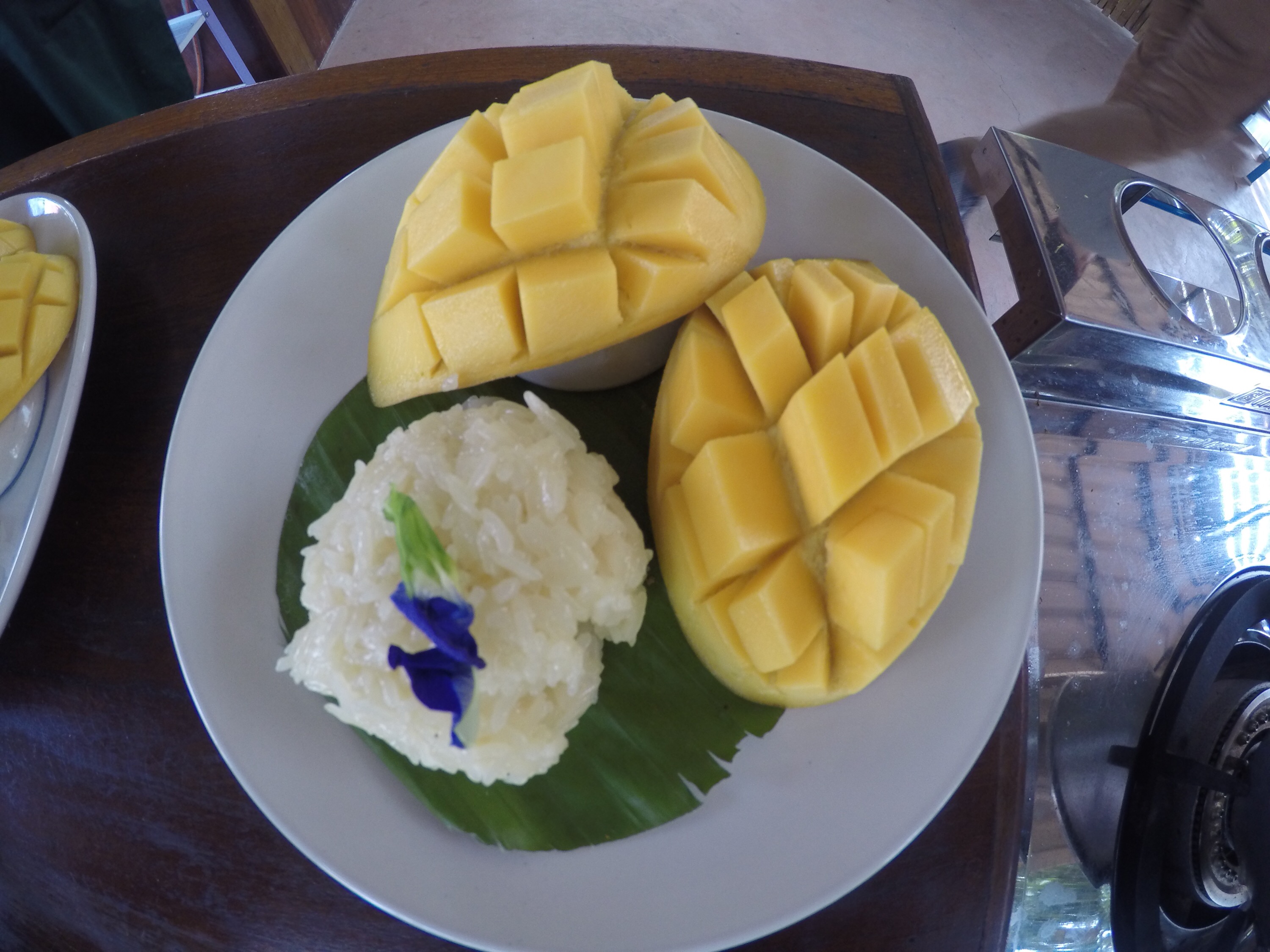
My mango with sticky rice
On Thursday morning I was picked up from my guesthouse to spend the day at a traditional Thai cooking class. I was accompanied by a family from Hong Kong and of course our teacher Ben. He was very knowledgeable about Thai cooking (plans to open his own restaurant soon).
We drove for about 40 minutes and arrived to a nice garden full of trees and a covered terrace with our cooking tables and stoves next to them. The whole place had nice modern design.
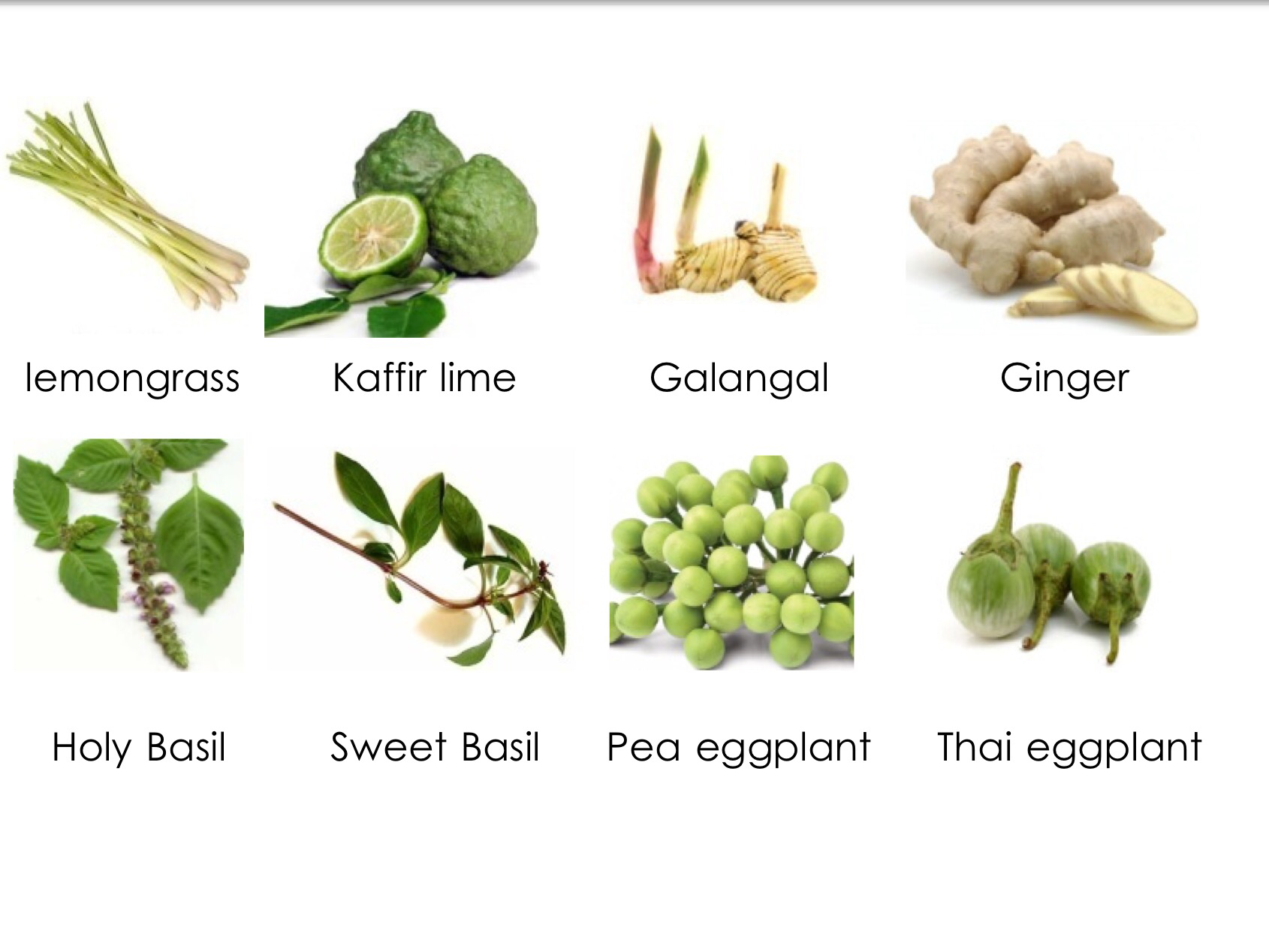
Ben first gave us introduction into the ingredients which can be seen nearly in every Thai dish. To name a few: lemongrass (commonly used in soup dishes, it also helps to maintain healthy cholesterol levels), kaffir lime (zest is used in curry paste and leaves in curry and soups), galangal (used in soups for its aromatic smell and it can also relieve diarrhea), ginger, egg plant, holy basil and others. Most of the ingredients I saw, smelled and tasted for the first time.
We also learned about rice (of course!). For regular rice, in Thailand they normally eat all kinds of rice but Jasmine rice is the most popular one. Jasmine rice is the main carb for all part of Thailand especially Southern and Central.
Sticky rice (some people call Glutinous rice) is the main carb for Northern and North Eastern of Thailand. If you visit any local house in those regions, 80% will use sticky rice.For the sweet sticky rice (commonly eaten with mango for the desert) they have to cook the rice with sugar and coconut milk to get the sweet taste.
Whole new chapter were the sauces. Fish sauce, light soy sauce, seasoning sauce and oyster sauce. Fish sauce is used in almost every Thai dish. It provides salty taste (they all do). Light soy sauce origins in China and is used in stir-fried dishes (interesting fact: all Thai stir-fried dishes are adopted from Chinese quisine). Seasoning sauce is similar to soy sauce but contains more sodium (tastes more salty). Oyster sauce is used for enhancing the flavour of the meat and veggies in stir-fried dishes (Mushroom sauce can be a substitution for vegans).
For cooking we could choose from three dishes from each category. I chose papaya salad for appetizer, green curry from curries, tom yam from soups, pad thai from stir-fry and sticky rice with mango for the dessert.
Nearly for each meal we used pestle and mortar to prepare the seasoning, curry paste and even salad (for the salad we used a wooden pestle and mortar). I was happy for the free workout between eating of our meals but kudos to Thai ladies who cook the traditional way.
All the dishes were fairly easy to make and I was surprised how quickly they are prepared.
It was very delicious (Tom Yam and Pad Thai are my favourite). I can’t wait to see if I’ll be able to find the ingredients in Prague and cook my own curry again.

Thai main ingredients, Jasmine rice (in white bowl) and Sticky rice (in green bowl)
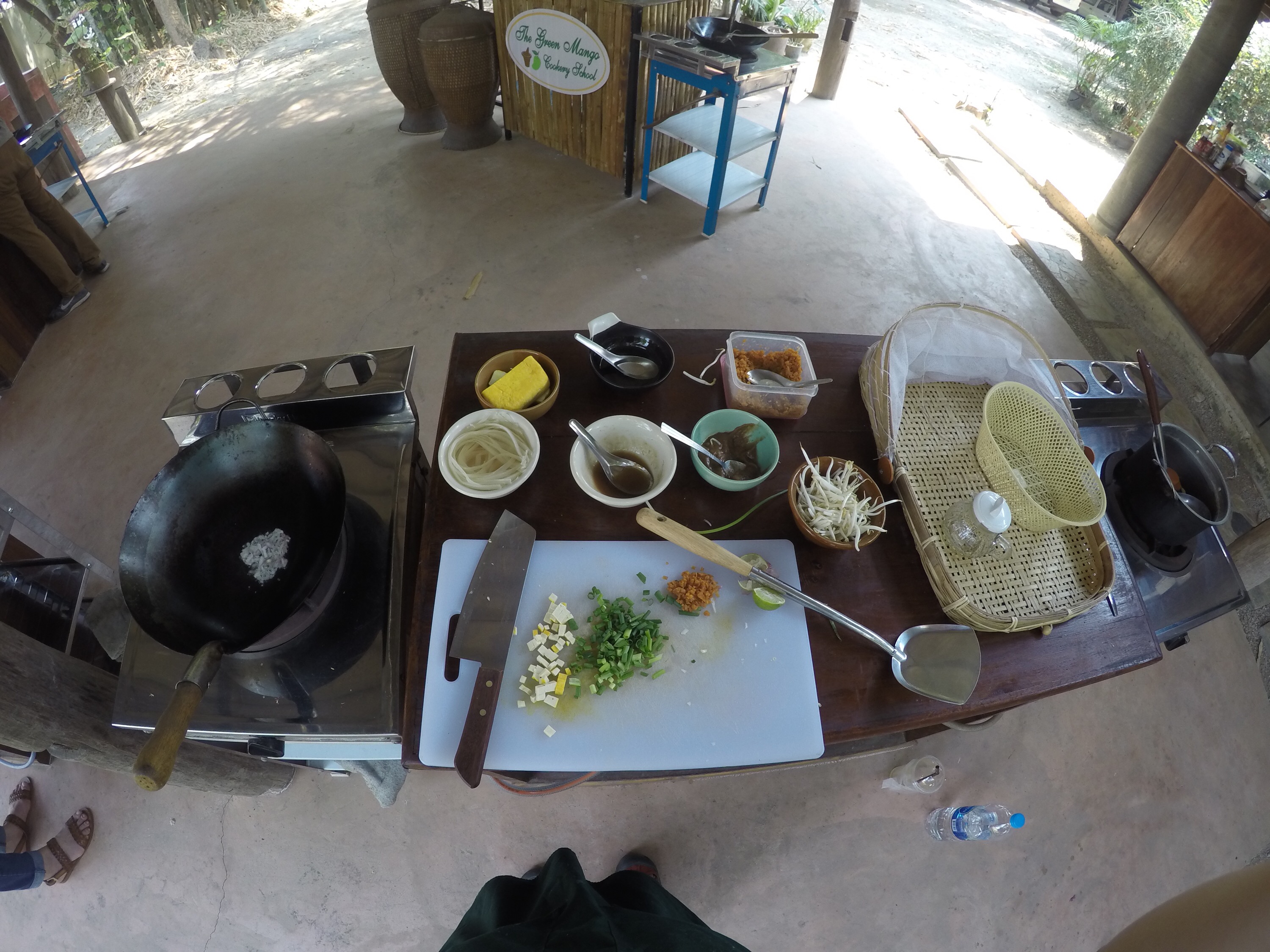
My working space

Sticky rice in making

Mango salad

Green curry

Pad Thai

Tom Yam soup (usually eaten in the evening when it is cooler)

Our cooking terrace


Úžasné, u toho bych chtěla byt
LikeLike